The Sistine Chapel: Michelangelo's Masterpiece
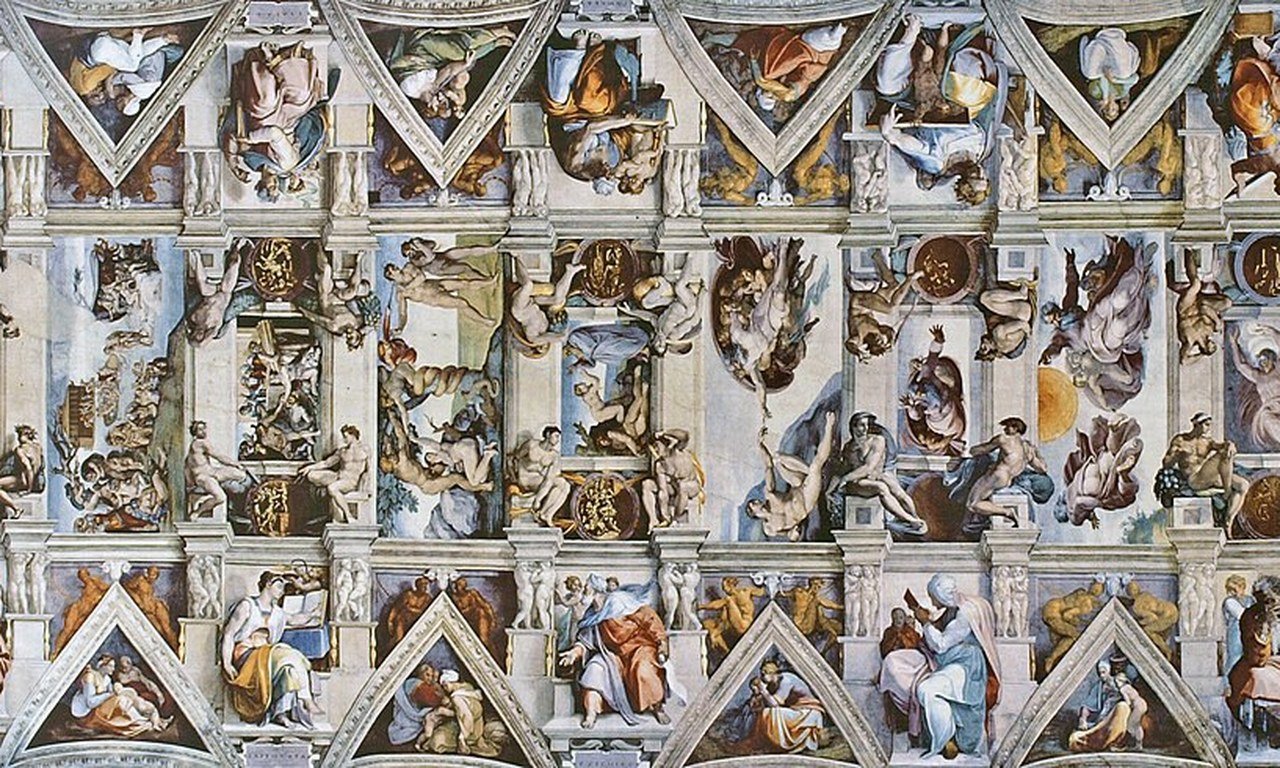
The Sistine Chapel is the last and most famous room of the Vatican Museums, in Vatican City. Michelangelo painted its ceiling between 1508 and 1512, and added the Last Judgment on the altar wall between 1536 and 1541. It is still a working chapel, where cardinals gather to elect a new pope. You reach it by walking through the museums, so one Vatican Museums ticket already includes it, with no separate chapel ticket. Photography is not allowed inside, visitors are asked to stay quiet, and shoulders and knees must be covered.
The Sistine Chapel is two things at once: the greatest painted room in the world, and a working chapel where the Catholic Church elects its popes.
Most people come for Michelangelo's ceiling, crane their necks for ten minutes in a crowded, hushed room, and leave without quite taking in what they are looking at or why it matters.
This guide covers what the chapel is, where it sits, who painted it and how, the scenes you are looking up at, why it is so famous, and the practical side of visiting.
📋 In This Guide
🎟 Top Vatican Tickets & Tours
What Is the Sistine Chapel?
The Sistine Chapel is the main chapel of the Apostolic Palace, the pope's official residence in Vatican City. It takes its name from Pope Sixtus IV, who had it built between 1473 and 1481, since "Sistine" comes from Sisto, the Italian form of his name.
The room itself is fairly plain in shape, a tall rectangle about 40 metres long and 13 metres wide, with a flat barrel-vaulted ceiling some 20 metres up.
What makes it extraordinary is what covers the walls and ceiling. It is the climax of a Vatican Museums visit, the last room you reach after walking the galleries, and for most people it is the reason they came.
Where Is the Sistine Chapel?
The Sistine Chapel is inside the Vatican Museums, in Vatican City, which sits within Rome. So yes, it is in the Vatican, and you get to it through the museums rather than through any separate door. There is no standalone entrance or ticket for the chapel on its own.
On the visitor route it comes right at the end, after the Gallery of Maps and the Raphael Rooms. You cannot skip straight to it, as the only way in is to walk the museum route to the far end.
Our Vatican Museums vs Sistine Chapel guide explains how the chapel, the museums, and Vatican City all fit together.
Who Painted the Sistine Chapel?
Michelangelo painted the two most famous parts, but he was not the only artist to work here. The story comes in three stages.
First, in the 1480s, Pope Sixtus IV hired a team of leading painters, including Botticelli, Perugino, Ghirlandaio, and Rosselli, to cover the side walls with scenes from the lives of Moses and Christ. These are often overlooked, but they are masterpieces in their own right.
Then, in 1508, Pope Julius II commissioned Michelangelo to paint the ceiling. Michelangelo was 33 and thought of himself as a sculptor, not a painter, and he took the job reluctantly. He finished in 1512. Years later, between 1536 and 1541, he returned under Popes Clement VII and Paul III to paint the Last Judgment across the whole altar wall.
So the short answer to who painted the Sistine Chapel is Michelangelo, for the ceiling and the Last Judgment, with the walls painted a generation earlier by Botticelli and his contemporaries.
How Long Did It Take to Paint?
Michelangelo painted the ceiling in about four years, from 1508 to 1512. That alone covers more than 300 figures across some 500 square metres, which is why it took so long and left him physically wrecked.
The Last Judgment on the altar wall took a further four to five years, from 1536 to 1541, when he was in his sixties. Add the earlier wall frescoes of the 1480s, and the chapel's decoration was built up over roughly 60 years in total.
How Was It Painted?
Michelangelo worked in buon fresco, painting onto fresh, wet plaster so the colour soaked in and set as the wall dried. This gives the fresco its lasting brightness, but it is unforgiving, as each patch has to be finished in a day before the plaster sets.
One popular image is wrong: he did not lie on his back. He designed a special standing scaffold and worked upright, leaning back and craning his neck for hours, with plaster and paint dripping onto his face.
He wrote a half-joking poem about the pain it caused him. He is also often said to have painted it entirely alone. He had assistants to mix plaster and grind colours, but he dismissed most of them early and did the figures himself.
The Ceiling and the Creation of Adam
The ceiling's centre is a row of nine scenes from the Book of Genesis, from God dividing light and dark to the story of Noah. Around them sit prophets, sibyls, and dozens of other figures.
The single most famous image is the Creation of Adam, where God reaches out to a reclining Adam and their fingers almost, but do not quite, touch.
That small gap has become one of the most recognised images in art. It sits in the middle of the ceiling, so it helps to know roughly where to look before the crowd carries you through.
The Last Judgment
The Last Judgment covers the entire wall behind the altar, painted nearly 25 years after the ceiling. It shows the second coming of Christ, with the saved rising on one side and the damned dragged down on the other, all swirling around a stern central figure of Christ.
It caused a scandal in its day for the mass of nude figures, and after Michelangelo's death another artist was hired to paint draperies over some of them, earning him the nickname "the breeches-maker". It is a darker, more turbulent work than the ceiling, and worth turning to face once you are inside.
Why the Sistine Chapel is So Famous
Two things make the chapel famous. The first is the art, the concentration of Michelangelo's genius in one room, which changed the course of Western painting. The second is its role: this is where the conclave meets.
When a pope dies or resigns, the cardinals lock themselves in the Sistine Chapel to elect his successor, with black or white smoke from a chimney signalling the result. The 2025 conclave held here elected Pope Leo XIV.
That mix of supreme art and living function is why the room is treated with such care, and why the rules inside are stricter than anywhere else in the museums.
Visiting the Sistine Chapel
You do not book the Sistine Chapel separately. Any Vatican Museums ticket includes it, and you reach it at the end of the route. A few things to know before you step in:
- No photos - Photography and video are banned inside, and guards enforce it, so keep your phone away. Our Vatican Museums photos guide explains the rule and where you can shoot.
- Keep quiet - It is a sacred space, and staff call for silence, so it is not the place for loud conversation.
- Cover up - Shoulders and knees must be covered, as set out in our dress code guide.
- Go early - The chapel is calmest at the first entry of the day, before the galleries fill up and funnel everyone to the end.
To see it at its best, book a timed skip-the-line entry ticket for an early slot, or take a guided tour that explains the ceiling before you reach it and can use the shortcut into St. Peter's Basilica.
Frequently Asked Questions
Who painted the Sistine Chapel?
Michelangelo painted the ceiling, from 1508 to 1512, and the Last Judgment on the altar wall, from 1536 to 1541. The side walls were painted earlier, in the 1480s, by Botticelli, Perugino, Ghirlandaio, and others.
How long did it take Michelangelo to paint the Sistine Chapel?
About four years for the ceiling, from 1508 to 1512, and another four to five years for the Last Judgment, from 1536 to 1541.
Where is the Sistine Chapel?
Inside the Vatican Museums, in Vatican City, within Rome. It is the last room on the museum route, so you reach it by walking through the galleries. There is no separate entrance.
Is the Sistine Chapel in the Vatican?
Yes. It is part of the Apostolic Palace and is reached through the Vatican Museums. One museums ticket includes it.
Did Michelangelo paint the Sistine Chapel lying on his back?
No. He worked standing on a special scaffold, leaning back and craning his neck. The idea that he lay down to paint is a myth.
How old was Michelangelo when he painted the ceiling?
He was 33 when he started the ceiling in 1508, having been born in 1475. He was in his sixties when he returned to paint the Last Judgment.
Why can't you take photos in the Sistine Chapel?
It is a consecrated chapel, and the no-photo rule helps keep the room calm and protects the frescoes. Guards ask visitors to put phones away and stay quiet.
Do I need a separate ticket for the Sistine Chapel?
No. The chapel is part of the Vatican Museums, so every museums ticket and tour includes it. There is no Sistine Chapel-only ticket.
Related Vatican Visitor Guides