The Raphael Rooms
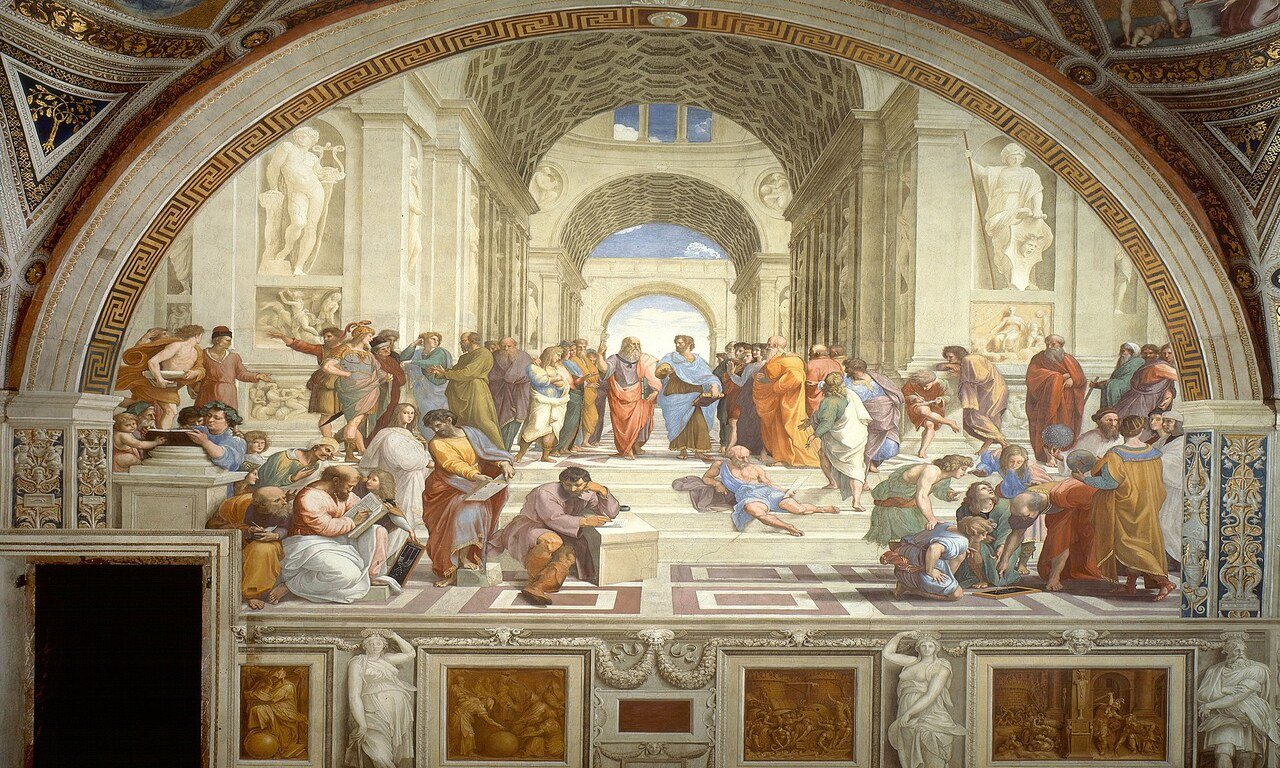
The Raphael Rooms are four frescoed rooms in the Vatican Museums, painted by Raphael and his workshop from 1508 onward, commissioned by Pope Julius II as his private apartments. They sit on the visitor route just before the Sistine Chapel and are included in every museums ticket, with no separate ticket needed. The most famous is the Room of the Segnatura, home to the School of Athens, one of the great paintings of the Renaissance. You can take photos without flash.
The Raphael Rooms are the part of the Vatican Museums most people walk straight through without realising what they are.
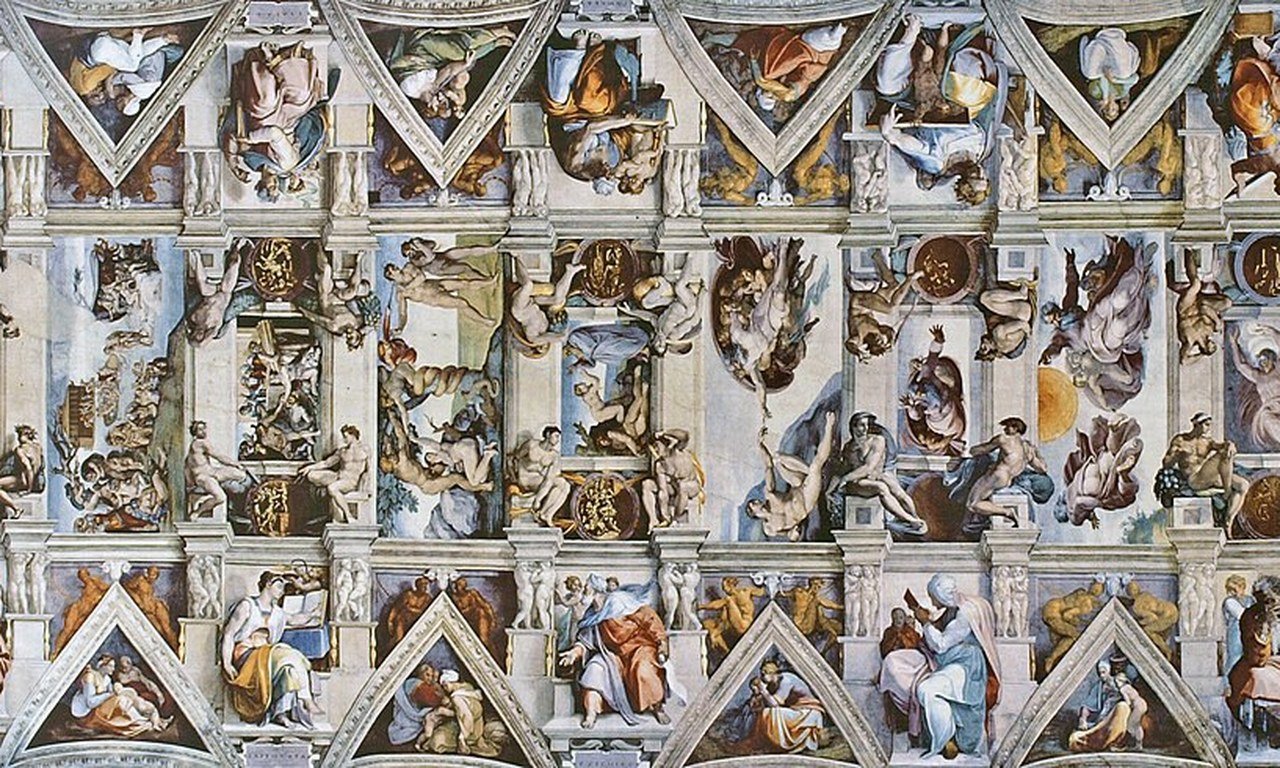
Hurrying to reach the Sistine Chapel, visitors pass four rooms that Raphael painted at the very same time Michelangelo was at work on the ceiling next door, in a quiet rivalry between the two greatest artists of the age.
This guide covers what the rooms are, where they sit on the route, the four rooms one by one, the School of Athens in detail, who painted them, and how to visit.
📋 In This Guide
🎟 Top Vatican Tickets & Tours
What Are the Raphael Rooms?
The Raphael Rooms, or Stanze di Raffaello in Italian, are four reception rooms in the Apostolic Palace that Pope Julius II chose as his private apartments.
In 1508 he handed the walls to a young artist from Urbino named Raphael, who was then only 25, and the result became one of the defining achievements of the High Renaissance.
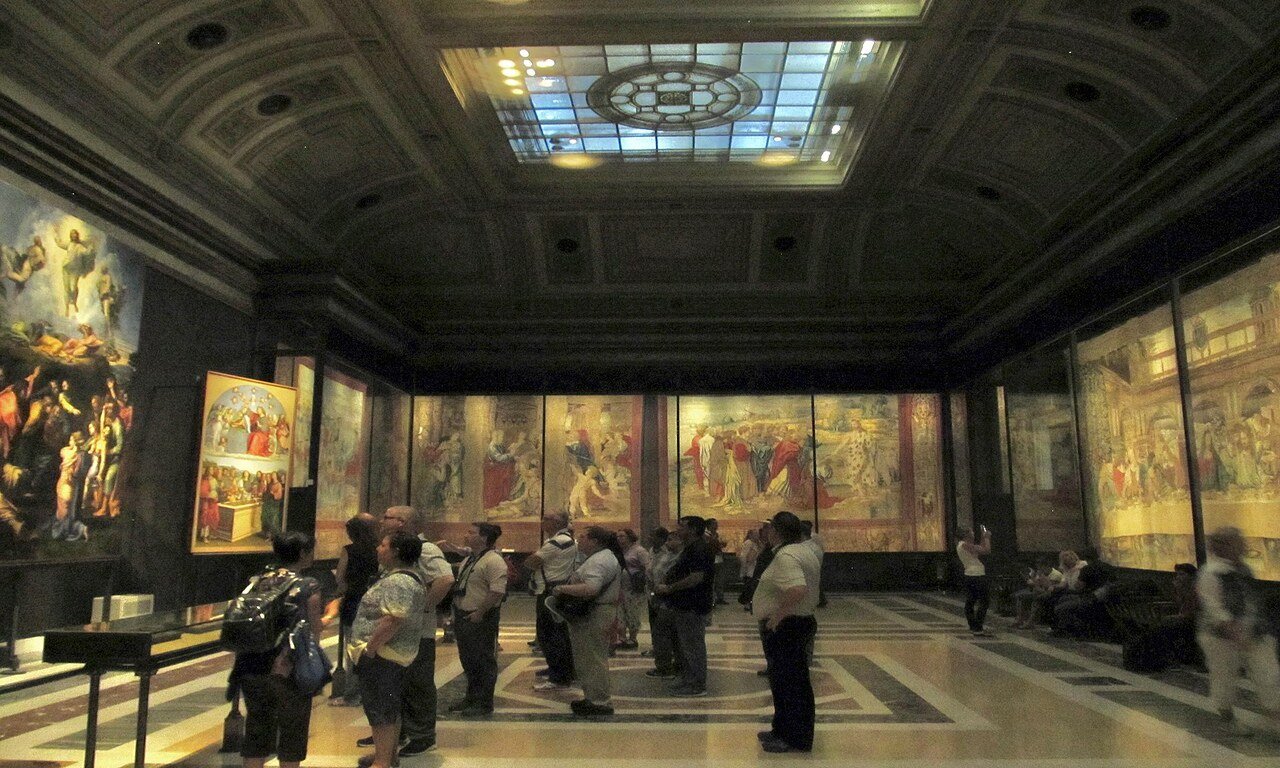
Raphael and his workshop covered the walls and ceilings with large frescoes, each room on a grand theme. The rooms are known in English by the subjects of their main scenes: the Room of Constantine, the Room of Heliodorus, the Room of the Segnatura, and the Room of the Fire in the Borgo.
Where Are They in the Vatican Museums?
The Raphael Rooms come near the end of the visitor route, after the Gallery of Maps and shortly before the Sistine Chapel. By the time you reach them you are close to the climax of the visit, which is exactly why so many people rush through.
They are included in every Vatican Museums ticket, as part of the one-way route, so there is nothing separate to book. Our Gallery of Maps guide covers the long golden corridor you pass through just before them.
The Four Rooms
Each room stands on its own, and it helps to know what you are looking at:
- Room of Constantine - The largest of the four, showing the life of the Emperor Constantine, including the Battle of the Milvian Bridge. It was mostly finished by Raphael's pupils after his death, from his designs.
- Room of Heliodorus - A room of dramatic scenes of divine protection, including the Expulsion of Heliodorus from the Temple and the Deliverance of Saint Peter, with striking effects of light.
- Room of the Segnatura - The first room Raphael painted and the most famous, home to the School of Athens. This was Julius II's study and library.
- Room of the Fire in the Borgo - Named after its main scene, a fire in Rome stopped by a papal blessing. Largely painted by the workshop to Raphael's designs.
The School of Athens
The School of Athens, in the Room of the Segnatura, is the highlight for most visitors. Painted around 1509 to 1511, it gathers the great philosophers of the ancient world under a vast classical arch, arranged around two central figures: Plato, pointing upward, and Aristotle, gesturing to the earth.
What makes it fun to study is that Raphael gave several philosophers the faces of his contemporaries. Plato is widely thought to be modelled on Leonardo da Vinci.
The brooding figure of Heraclitus, sitting alone on the steps, was added later with the face of Michelangelo, a nod to the rival working next door.
Raphael even painted himself into the crowd on the far right, looking out at the viewer. Our Sistine Chapel guide covers the Michelangelo ceiling that influenced him.
Who Painted the Raphael Rooms?
Raphael led the work and painted the finest passages himself, above all in the Room of the Segnatura. As the commission grew, he relied more on a large workshop, including Giulio Romano, to keep up, since he was also busy with other papal projects.
Raphael died suddenly in 1520, at just 37, with the rooms not yet finished. His pupils completed the last room, the Room of Constantine, from his drawings. So the rooms are the work of Raphael and his workshop together, spanning roughly 1508 to 1524.
Why They Are Worth Slowing Down For
It is tempting to treat the Raphael Rooms as a corridor to the Sistine Chapel, but they reward a few minutes of attention. This is Renaissance painting at its most balanced and graceful, and the School of Athens alone is worth the stop.
Because almost everyone is pressing on toward the chapel, the trick is simply to pause, let the crowd flow past, and give the Segnatura a proper look before moving on. A guide is especially useful here, as the rooms are dense with references that are easy to miss on your own.
Visiting the Raphael Rooms
There is nothing to book separately. Any Vatican Museums ticket includes the Raphael Rooms, and you pass through them on the way to the Sistine Chapel. A few tips:
- Go early - The rooms are narrow and get packed by mid-morning, so the first entry of the day is far more comfortable. Our best time to visit guide has the quiet windows.
- Photos are fine - You can take photos without flash, unlike in the Sistine Chapel.
- Consider a guide - The rooms are full of detail and references, and a guide brings them to life.
To see them at a steady pace, book a timed skip-the-line entry ticket for an early slot, or take a guided tour that explains the rooms before you reach the chapel.
Frequently Asked Questions
What are the Raphael Rooms?
The Raphael Rooms are four frescoed rooms in the Vatican Museums, painted by Raphael and his workshop from 1508, originally the private apartments of Pope Julius II. The most famous holds the School of Athens.
Where are the Raphael Rooms in the Vatican?
On the visitor route near the end, after the Gallery of Maps and just before the Sistine Chapel. They are inside the Vatican Museums in Vatican City.
Do I need a separate ticket for the Raphael Rooms?
No. They are part of the standard museum route, so every Vatican Museums ticket and tour includes them.
What is the School of Athens?
A large fresco in the Room of the Segnatura showing the great philosophers of antiquity, with Plato and Aristotle at the centre. Several figures carry the faces of Raphael's contemporaries, including Leonardo da Vinci and Michelangelo.
Who painted the Raphael Rooms?
Raphael and his workshop. Raphael painted the best passages himself, especially the Segnatura, and his pupils finished the rooms after his death in 1520.
Can you take photos in the Raphael Rooms?
Yes, without flash. The no-photo rule applies only to the Sistine Chapel, not to the Raphael Rooms.
Related Vatican Visitor Guides