Vatican Museums Map
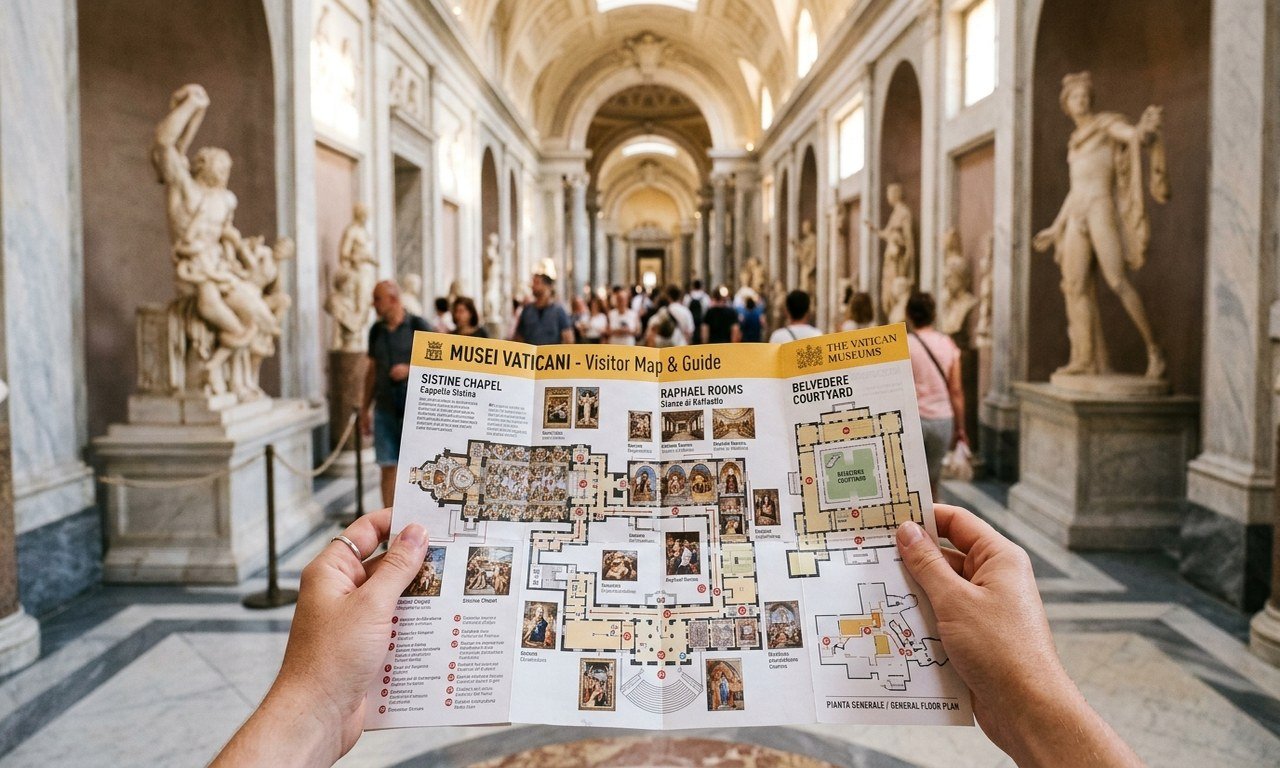
The Vatican Museums are one long, mostly one-way route that winds through a series of galleries and ends at the Sistine Chapel. You enter on Viale Vaticano, follow the signs through the main halls (the Pio-Clementino sculptures, the Gallery of Tapestries, the Gallery of Maps, and the Raphael Rooms), and finish in the Sistine Chapel before exiting by the spiral staircase. Doing the whole thing is about 7 km of walking. Pick up a free paper map at the entrance, or download the official map PDF before you go.
The Vatican Museums map is worth a look before you visit, because this is one of the largest museum complexes in the world and it is easy to either get lost or miss the parts you came for.
The layout is not a free-roam floor plan but a set route, so the map is less about finding your own way and more about knowing what is coming and what you can skip.
This guide explains how the museums are laid out, the order you walk through them, the main sections to know, and where to get the official map, including the step-free version.
📋 In This Guide
🎟 Top Vatican Tickets & Tours
Where to Get the Vatican Museums Map
You have three easy ways to get a map:
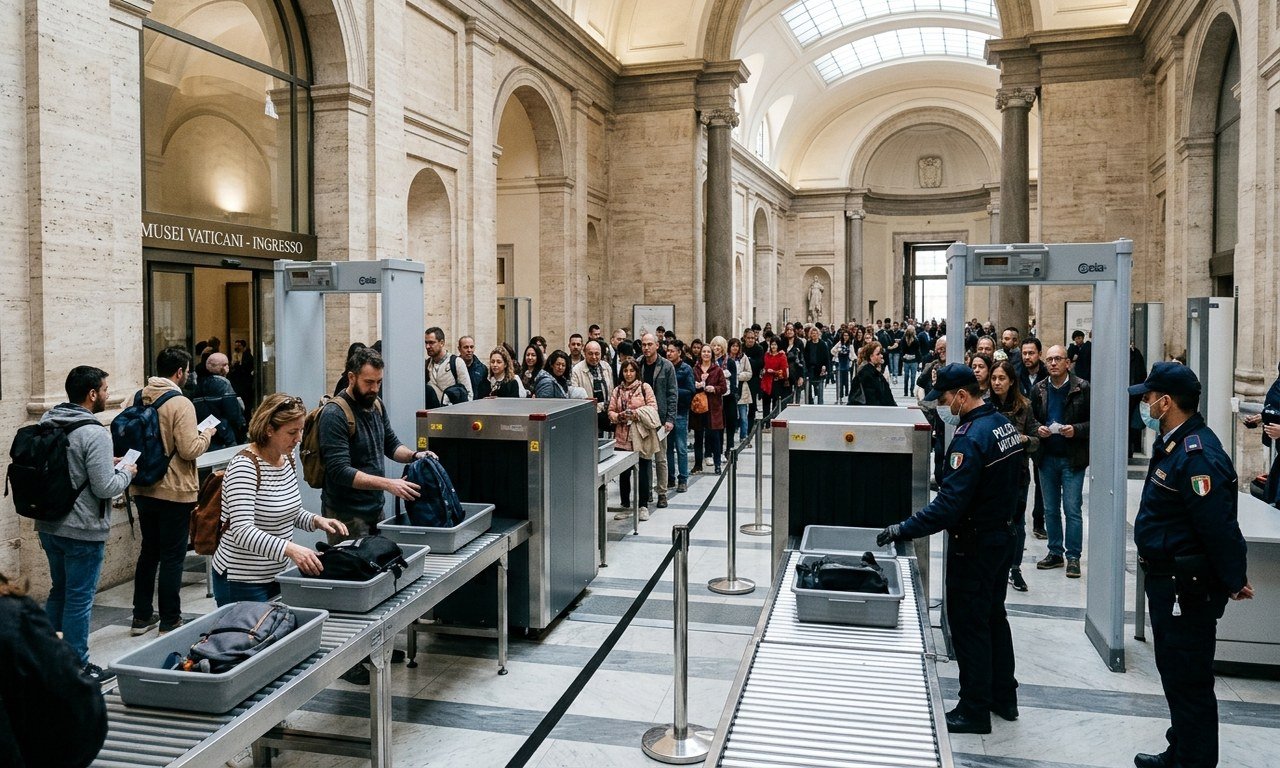
- Free paper map at the entrance - Pick one up from the information desk just inside the entrance as you arrive. It shows the route and the main rooms.
- Download the official PDF - The Vatican publishes a map you can download and save to your phone before you go, which is handy for planning and for offline use inside.
- Signs along the way - The route is well signposted throughout, with directions to the Sistine Chapel at every junction, so you can follow it even without a map in hand.
A map matters most for deciding what to prioritise, because you will not have time or energy for every room.
How the Museums Are Laid Out
The museums are not a single building where you wander freely. They are a long chain of galleries, courtyards, and corridors that you walk in a set order, climbing and descending between floors, and ending at the Sistine Chapel. From the entrance, the main route runs roughly like this:
- Entrance hall, ticket check, and the escalators up
- The Pinecone Courtyard (Cortile della Pigna), a good orientation point outdoors
- The Egyptian Museum and the Pio-Clementino sculpture galleries, including the Octagonal Courtyard with the Laocoön and the Apollo Belvedere
- The Gallery of the Candelabra, the Gallery of Tapestries, and the Gallery of Maps, the long corridors that lead toward the chapel
- The Raphael Rooms
- The Sistine Chapel, at the very end of the route
- The exit, down the spiral staircase
The Pinacoteca (the painting gallery) sits slightly off this line, near the start, so you visit it as a detour rather than on the main flow.

The Main Sections on the Map
A few names cover most of what you will see on the map:
- Pinacoteca: the picture gallery, with paintings by Raphael, Caravaggio, and others. An optional detour near the entrance.
- Pio-Clementino Museum: the main classical sculpture collection, including the Octagonal Courtyard.
- Egyptian and Etruscan Museums: two smaller specialist collections you can dip into or skip.
- The galleries corridor: the Candelabra, the Tapestries, and the Gallery of Maps, a highlight in its own right.
- The Raphael Rooms: four frescoed rooms including the School of Athens, covered in our Raphael Rooms guide.
- The Sistine Chapel: Michelangelo's ceiling and the Last Judgment, at the end of the route. See our Sistine Chapel guide.
- The spiral staircase: Giuseppe Momo's double-helix staircase at the exit, worth a photo on the way out.
Following the Route
The route is largely one-way, so you cannot double back easily once you have moved on from a section. That makes a plan worth having. If your main goal is the Sistine Chapel and the big-name galleries, follow the signs straight along the main route and treat the Egyptian, Etruscan, and Pinacoteca sections as optional. If you have more time, take those detours early, before the main corridors.
Plan on about three hours to walk the core route at a steady pace, which our how long to spend at the Vatican guide breaks down. Our top highlights guide is a good companion to the map for deciding what not to miss.
Entrance, Exit, and Shortcuts
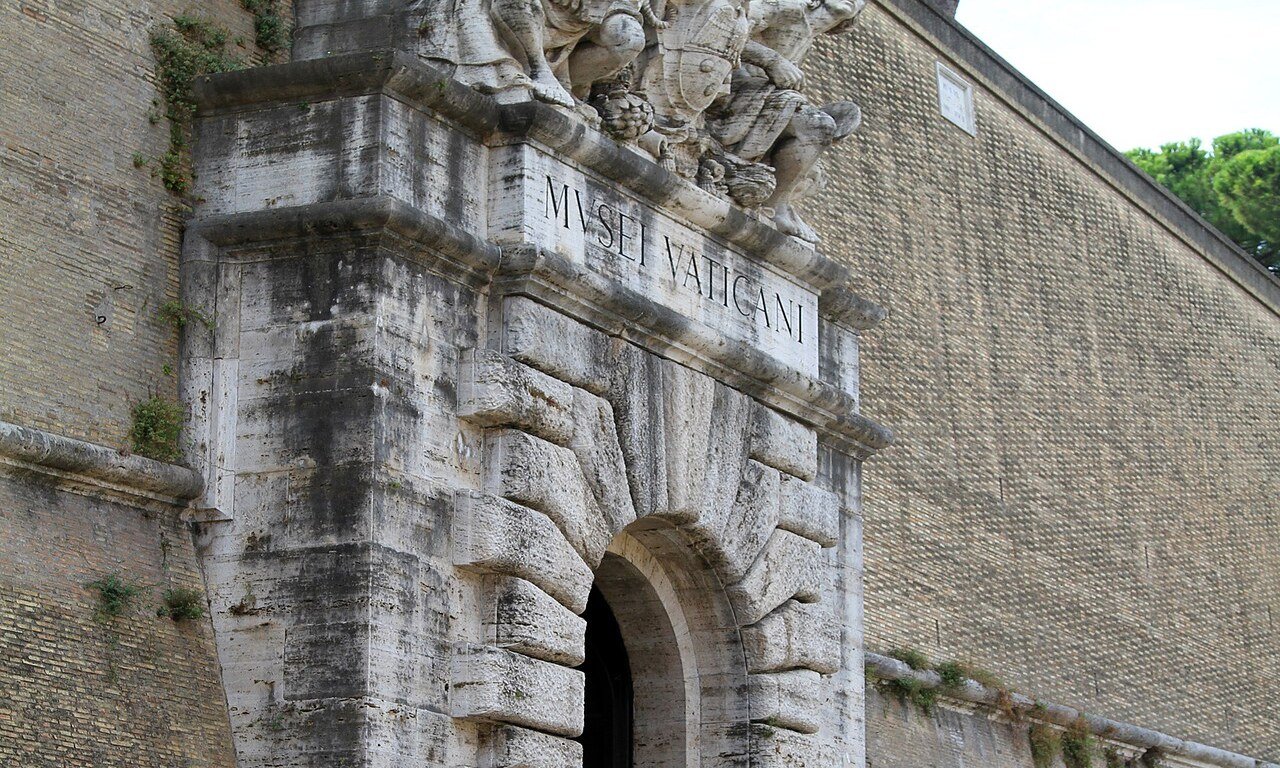
Three points on the map are worth knowing before you arrive. The entrance is on Viale Vaticano, the only public way in, covered in our Vatican Museums entrance guide.
The exit is a separate door further along the same street, where the spiral staircase brings you down, so you do not leave where you came in.
There is also a shortcut that does not appear on the standard map: a connecting door in the corner of the Sistine Chapel that leads straight into St. Peter's Basilica. It is reserved for guided groups, so on a self-guided visit you exit the museums and walk around to the Basilica instead.
Once you know the layout, book a timed skip-the-line entry ticket so you are not stuck in the entrance queue.
The Step-Free Map
The Vatican also publishes a separate barrier-free map that marks a step-free route through the museums, using lifts to avoid the stairs on the standard path.
It is the best tool for visitors using a wheelchair or with limited mobility, and our wheelchair and disability access guide explains the accessible route and what to expect.
Frequently Asked Questions
Where can I get a map of the Vatican Museums?
Pick up a free paper map at the information desk just inside the entrance, or download the official map PDF to your phone before you visit. The route is also well signposted throughout.
How are the Vatican Museums laid out?
As one long, mostly one-way route through a chain of galleries and corridors, ending at the Sistine Chapel. You pass the Pio-Clementino sculptures, the Gallery of Tapestries, the Gallery of Maps, and the Raphael Rooms before reaching the chapel.
Is the Sistine Chapel at the start or the end?
At the end. The Sistine Chapel is the final stop on the main route, so you walk through the rest of the museums to reach it.
How big are the Vatican Museums?
Very big. The full route through all the open sections is around 7 km of walking, which is why most visitors follow the main path and skip some of the optional galleries.
Can I choose my own route through the museums?
Not really. The museums follow a set, largely one-way route, so you cannot freely wander or easily backtrack. You can skip optional sections like the Egyptian Museum, but the overall direction is fixed.
Is there a step-free map for wheelchair users?
Yes. The Vatican publishes a separate barrier-free map that marks a step-free route using lifts. See our wheelchair and disability access guide for the details.
Related Vatican Visitor Guides