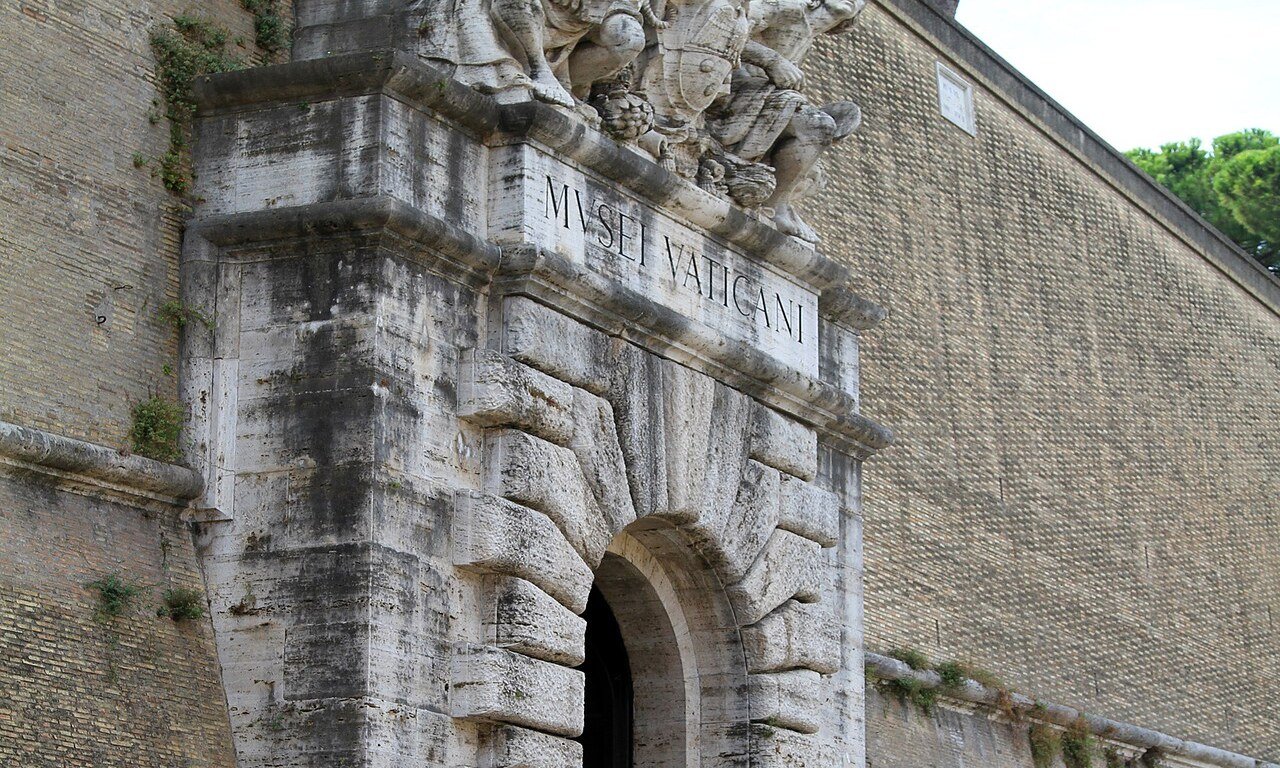
Vatican Museums Wheelchair Accessibility Guide
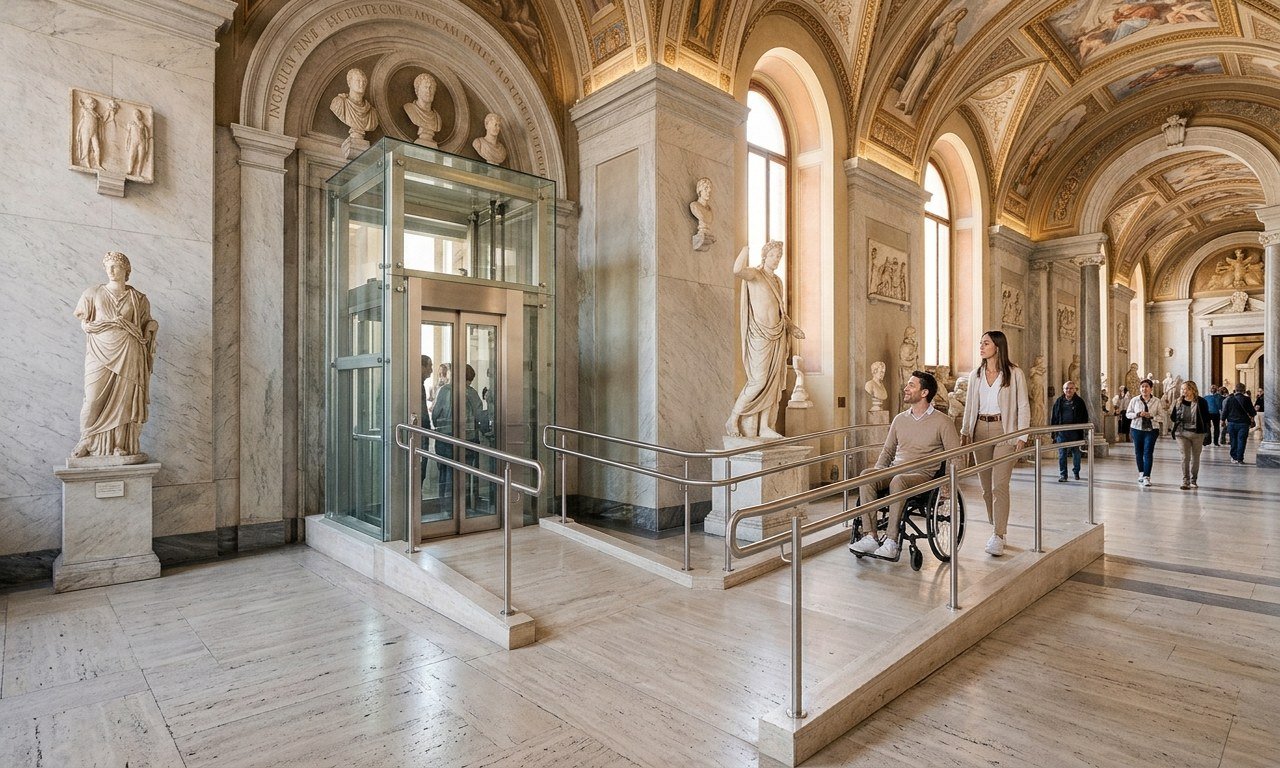
Yes, the Vatican Museums are largely wheelchair accessible. The entrance is step-free, lifts connect the floors, and a staff-operated lift takes wheelchair users into the Sistine Chapel. Visitors with a certified disability get in free, along with a companion if needed, and skip the queue, though free tickets are issued at the desk on the day, not online. You can borrow a manual wheelchair free from the cloakroom. The main catch is St. Peter's Basilica, which has no step-free link from the museums, so you take an external route of about 1 km to reach it.
The Vatican Museums are far more accessible than their old, stair-filled reputation suggests. The main galleries and the Sistine Chapel can be visited by wheelchair users with help from staff, and disabled visitors get free, priority entry.
There are a few things to plan around, mainly the separate route to St. Peter's Basilica, but a visit is very doable.
This guide covers it all: tickets and free entry, wheelchair hire, the step-free route and the Sistine Chapel lift, toilets, how to reach St. Peter's, and getting there.
📋 In This Guide
🎟 Top Vatican Tickets & Tours
Is the Vatican Wheelchair Accessible?
Mostly, yes. The Vatican Museums were adapted over the years for visitors with mobility needs, and most of the museum spaces are accessible.
The entrance has a ramp, the floors are smooth, and lifts connect the levels, so a wheelchair user can follow a step-free version of the route with staff help.
A few parts are not accessible. The standard visitor route includes some flights of stairs, which staff help you around using lifts and alternative paths.
The Vatican Gardens are not accessible because of steep, uneven ground, and at St. Peter's Basilica the dome climb and the underground Necropolis cannot be reached by wheelchair.
The biggest thing to plan for is that the museums and the Basilica are not connected step-free, covered below.
Free Entry and Priority Access
Visitors with a certified disability of at least 67 percent get into the Vatican Museums free, and a companion also gets in free if the visitor is not self-sufficient. A few important details:
- Bring your documentation - You show a certificate of your disability at the Special Permits or Welcome Desk in the museum entrance hall. Staff may ask to see it.
- Free tickets are not booked online - You collect them on the day at the desk, so you cannot reserve a free ticket in advance.
- You skip the queue - Disabled visitors and their companions get priority entry without queuing.
- If you do not qualify for free entry, you can still buy a standard ticket with priority access and skip the main line, which is worth booking ahead.
If you are buying a priority-access ticket, book a timed skip-the-line entry ticket in advance.
Wheelchair Rental and Your Own Device
You can borrow a manual wheelchair free of charge from the cloakroom near the entrance, subject to availability. You need to leave a valid ID as a deposit, and because numbers are limited, it is worth asking a day ahead if you can. Some chairs are also kept near the Sistine Chapel lift.
You can bring your own wheelchair, and scooters and electric wheelchairs are generally allowed. A few galleries have space or weight limits, though, so you may be asked to switch to one of the museum's manual chairs for part of the route. If you use a larger powered chair, plan for this.
The Step-Free Route and the Sistine Chapel
From the entrance, you come in by a ramp and ride a lift up into the museums, keeping to the side to bypass the turnstiles. Inside, the floors are smooth and lifts connect the levels, so staff guide you along a step-free version of the route. In practice this means going around some of the staircases on the normal path, sometimes against the flow of the crowd or through roped-off sections, with a guard helping you.
The Sistine Chapel is reached by a designated wheelchair lift, operated by a staff member. The lift has size and weight limits, roughly 76 by 104 cm and up to 230 kg, so if your own chair is larger, the museum lends you a manual one to use for that part. Inside the chapel there are small ramps and mostly smooth floors. A barrier-free route map is available to help you plan, and our museum map guide explains the layout.
Accessible Toilets and Facilities
Accessible toilets are located along the visit route and at the cafes and refreshment points, and they are marked on the museum map. For the accessible restroom near the entrance you may need to ask the cloakroom staff for the key. The cafes and self-service restaurants inside are reachable too, so you can take a break without leaving.
Getting to St. Peter's Basilica
This is the part to plan for. The Vatican Museums and St. Peter's Basilica are not connected by a step-free route. The internal shortcut from the Sistine Chapel that guided groups use involves stairs, so wheelchair users cannot take it.
Instead, you leave the museums the way you came in and travel an external route of about 1 km along the public pavement, downhill from the museums to St. Peter's Square. Return any borrowed wheelchair before you leave the museum, as it cannot go with you. For that reason, see the Sistine Chapel before the Basilica, not after.
St. Peter's Square itself is flat and accessible, and the Basilica has a ramped entrance on the right side of the colonnade, with staff to assist. The dome climb and the Necropolis under the Basilica are not accessible. Our St. Peter's Basilica tickets guide has more on visiting it.
Getting There and Accessible Tours
The easiest way to reach the Vatican is by an adapted taxi, which drops you at the entrance. On public transport, take Metro Line A to Ottaviano, which has lifts and ramps, as the buses are less reliable for wheelchair users. Our how to get to the Vatican guide covers the options.
Standard group tours follow a fixed route that may not suit wheelchair users, so if you want a guide, a private tour is the better choice, as it can follow the step-free route and go at your pace. If you are attending a Wednesday Papal Audience, reserved seating is available for wheelchair users and a companion, which our General Papal Audience guide explains.
Frequently Asked Questions
Is the Vatican wheelchair accessible?
Largely yes. The Vatican Museums have a step-free entrance, lifts between floors, and a wheelchair lift into the Sistine Chapel, with staff helping you around the stairs on the standard route. St. Peter's Square and the Basilica are accessible too, though the dome and the Necropolis are not.
Do disabled visitors get free entry to the Vatican Museums?
Yes. Visitors with a certified disability of at least 67 percent enter for free, with a companion also free if needed. You show your disability certificate at the Special Permits or Welcome Desk, as free tickets are issued on the day, not booked online.
Can I rent a wheelchair at the Vatican Museums?
Yes. Manual wheelchairs can be borrowed free from the cloakroom, subject to availability, with a valid ID left as a deposit. It is worth asking a day ahead, as numbers are limited.
Can I use my own electric wheelchair or scooter?
Yes, but some galleries have space or weight limits, so you may be asked to switch to a museum manual chair for part of the route. Very large powered chairs are the most likely to be restricted.
Is the Sistine Chapel wheelchair accessible?
Yes, by a staff-operated lift with size and weight limits of about 76 by 104 cm and 230 kg. If your chair is larger, the museum lends you a manual one for that section. Inside, there are small ramps and mostly smooth floors.
Can wheelchair users get from the Museums to St. Peter's Basilica?
Not step-free through the internal shortcut, which has stairs. You leave the museums and take an external route of about 1 km downhill to St. Peter's Square, so visit the Sistine Chapel first and return any borrowed wheelchair before you go.
Is there a wheelchair accessible Vatican tour?
Yes. A private tour is the best option, as it can follow the step-free route and move at your pace, unlike standard group tours on a fixed path.
Related Vatican Visitor Guides